Transforming anxiety into a $12M subscription.
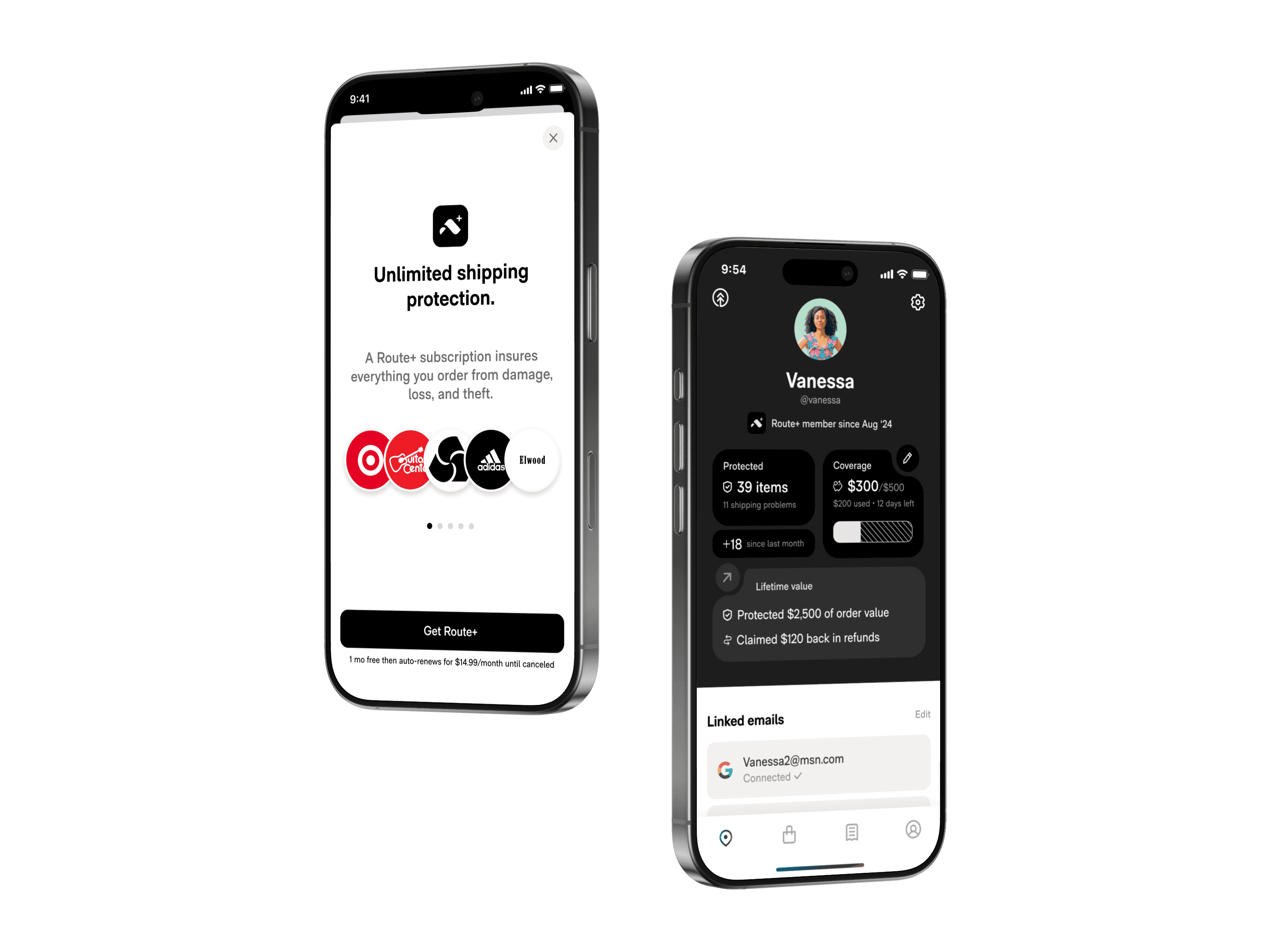
Challenge
Faced with declining growth of Route's flagship insurance at checkout product, leadership asked the mobile team to monetize the free app and create a new source of recurring revenue.
As lead designer I owned end to end research and design, and co-owned growth strategy. I was supported by a squad of 2 product managers, a data analyst, and 4 engineers.
THE APPROACH
Experiment into product market fit.
Our goal was to validate viability and de-risk launch of a new product line using a 4-phased approach over 4 months.
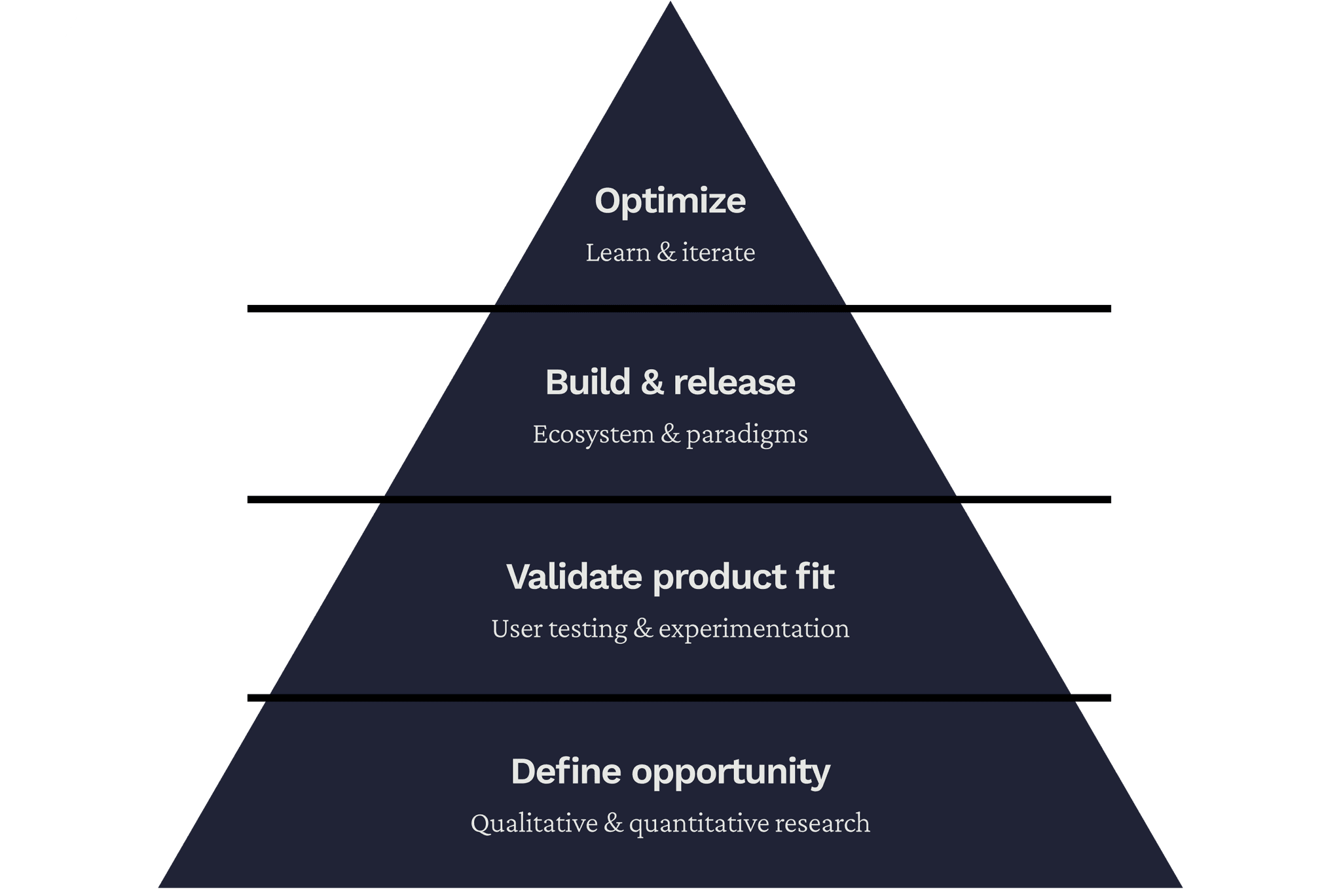
Define opportunity
RESEARCH METHODS
I explored the entire post purchase space for opportunity areas.
Qualitative immersion
Focus groups and user interviews helped us examine purchasing, tracking, and insurance behavior and core user needs.
Behavioral analysis
Users testing with ranking, sorting, and rating tasks helped us rapidly generate and validate hypotheses.
Contextual observation
Observing users and a 10-day diary study revealed real-time decision-making processes and points of friction.
Data analysis & profiling
Consumer profiling, usage dashboards, and AI-aggregated feedback crystalized the funnels and cohorts with the heaviest pain points.
Consumer profiling revealed a key segment with high revenue potential.
"Power Trackers" (users tracking 6+ orders monthly) represented just 25% of MAU but exhibited 2x higher retention and greater AOV.
CASUAL
POWER
5%
15%
Mysteriously, Power Trackers are 3X more likely to opt out of a la carte insurance. We had a hunch that this signaled a major opportunity.
Reframing the problem
Power Trackers need an easy way to protect all of their orders at once.
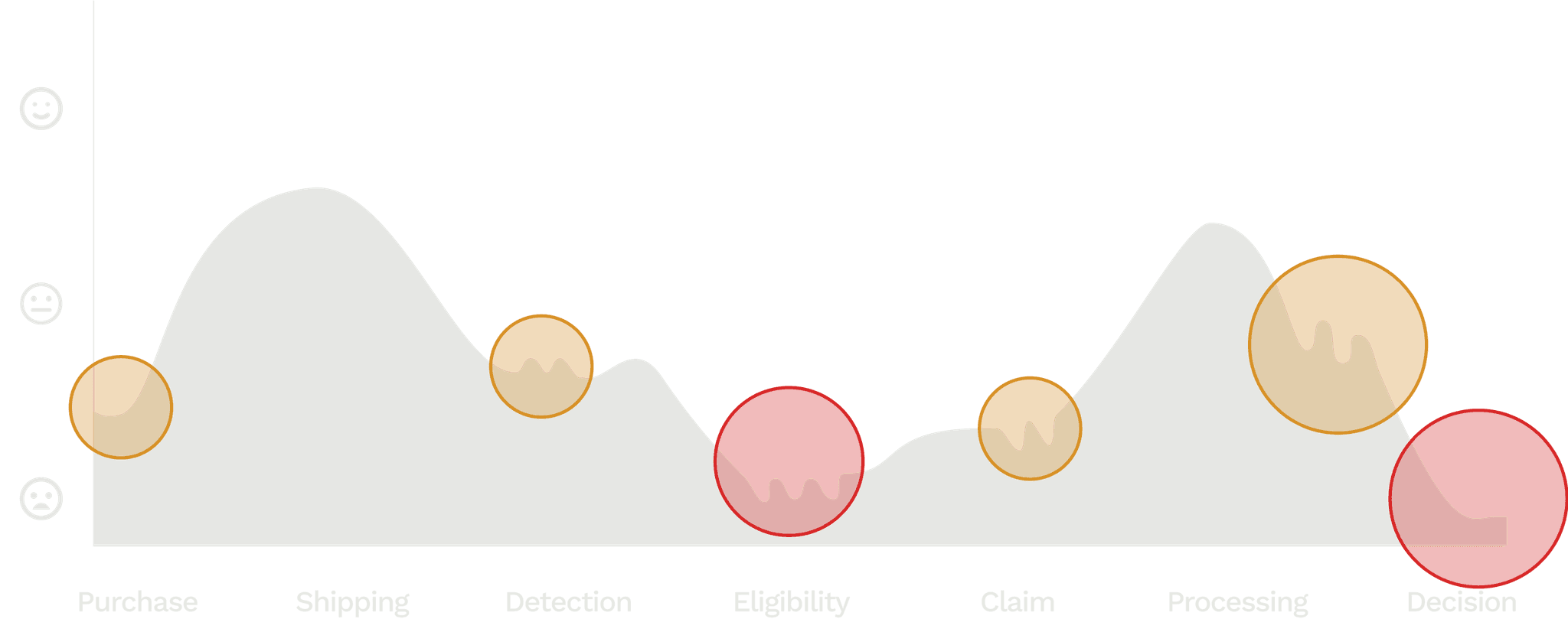
The traditional insurance user journey victimizes responsible people through predatorial tactics, hidden costs, punishing eligibility windows, and an antiquated and anxiety-provoking claims process.
"Insurance is a burden. I lose money if [my item] isn't damaged or lost, or I get a big headache if it is."
TEAM & EXECUTIVE alignment
A mobile-first insurance subscription was our most promising concept.
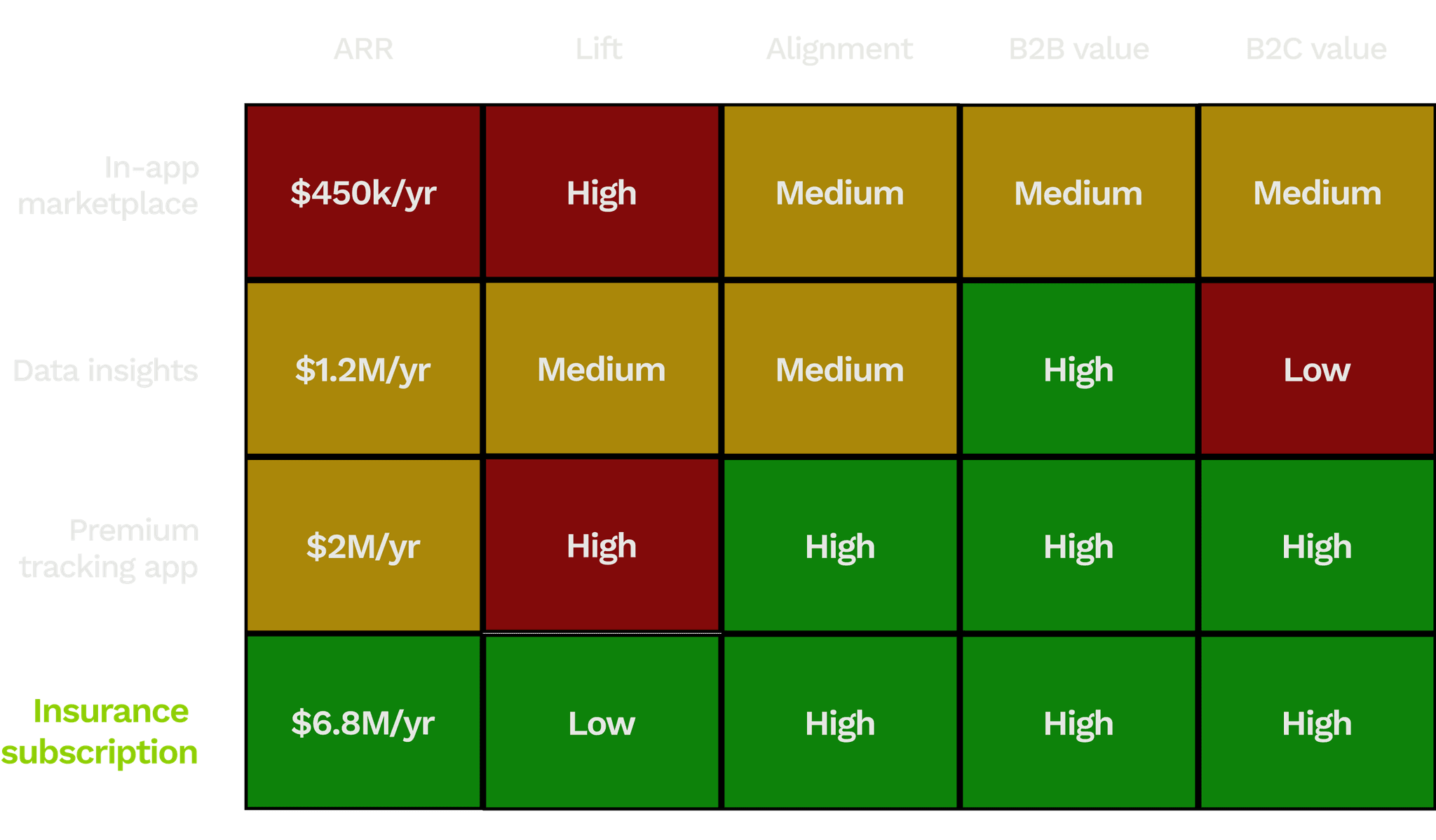
With 3M monthly active users * 5% purchase * 25% conversion * $15/month * 12 months we were estimating the opportunity at $6.8M ARR.
Validate product fit
We synthesized the research into 3 core hypotheses.
1. We'll see higher subscription conversion if users try Route protection before they're asked to subscribe.
2. The less input a subscription requires from users to spot issues and process claims, the better its retention.
3. Generous claim eligibility and acceptance practices will ultimately improve ARR even if margins go down.
VALIDATING PRODUCT FIT
Post purchase protection
We built a simple in-app insurance MVP and released it to 20k users to validate interest, margins, and ensure we could make good on our insurance at scale.
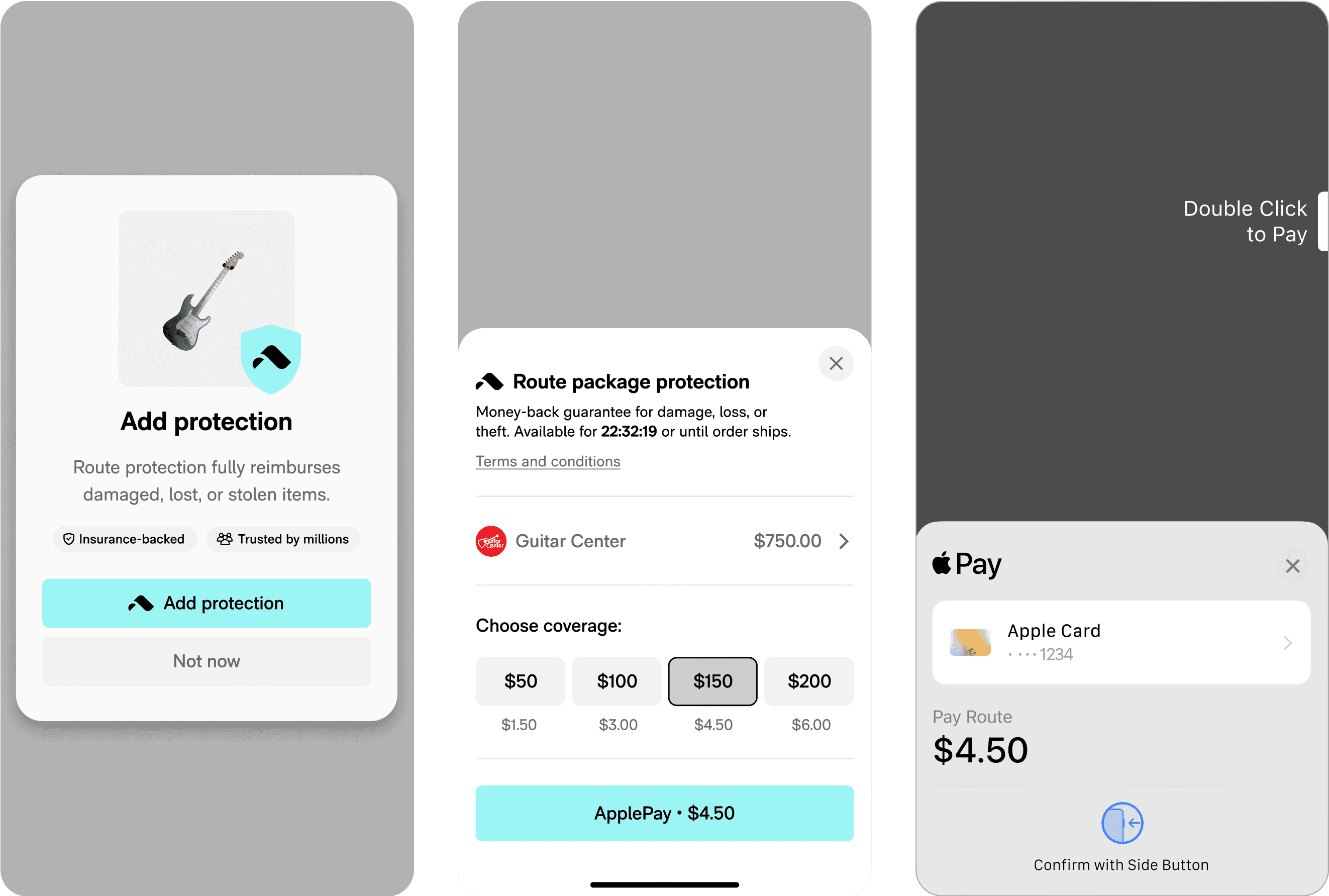
Users could insure individual orders and then request a refund if the order is lost, damaged, or stolen.
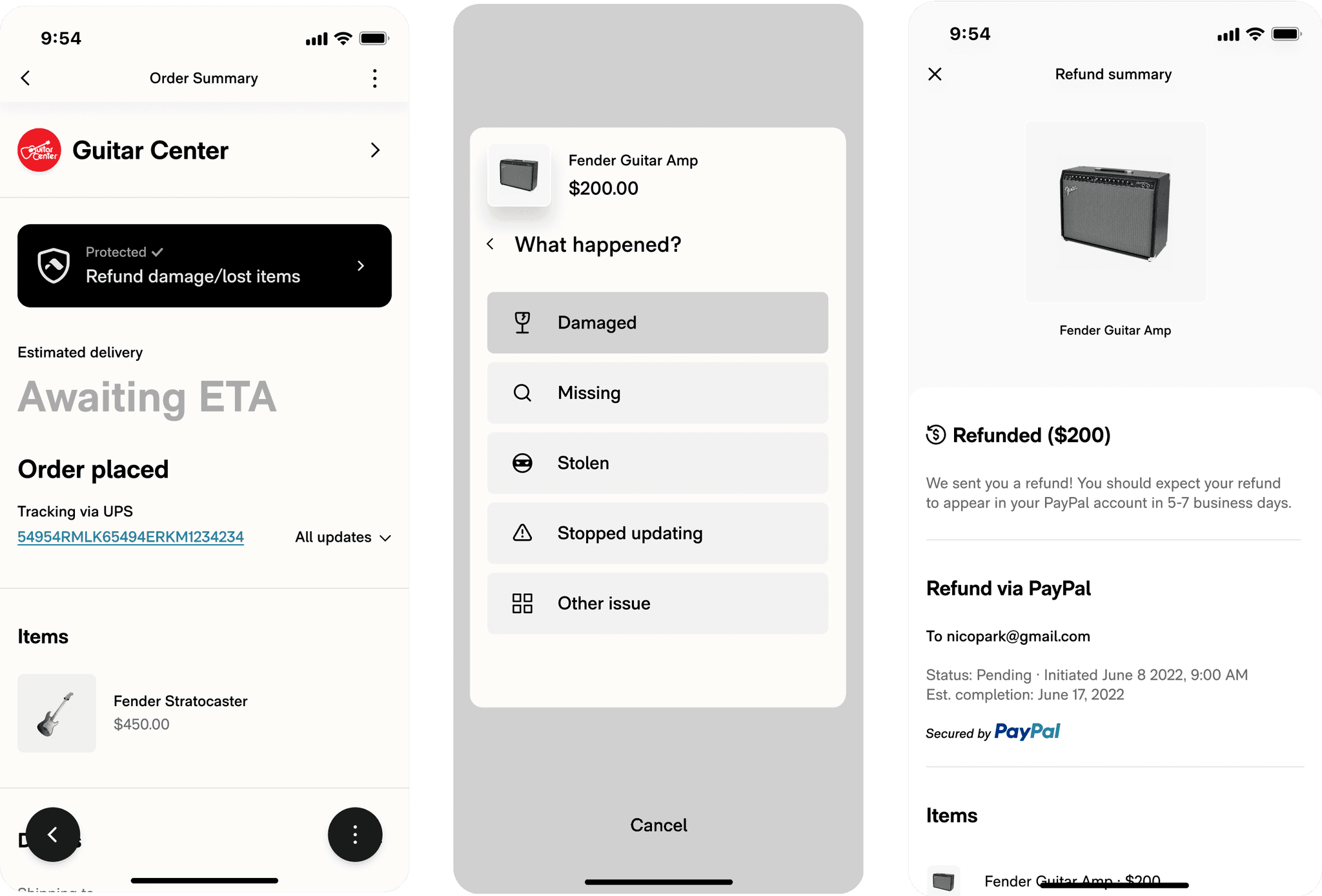
We validated demand, created a subscription entrypoint, and built a standalone revenue source.
ARR
$2M/yr
Profit margin
30%
Conversion
8%
App retention
+2%
Build & release
DEFINING BREAKPOINTS
Painted door tests revealed pricing & packaging sweet spots.
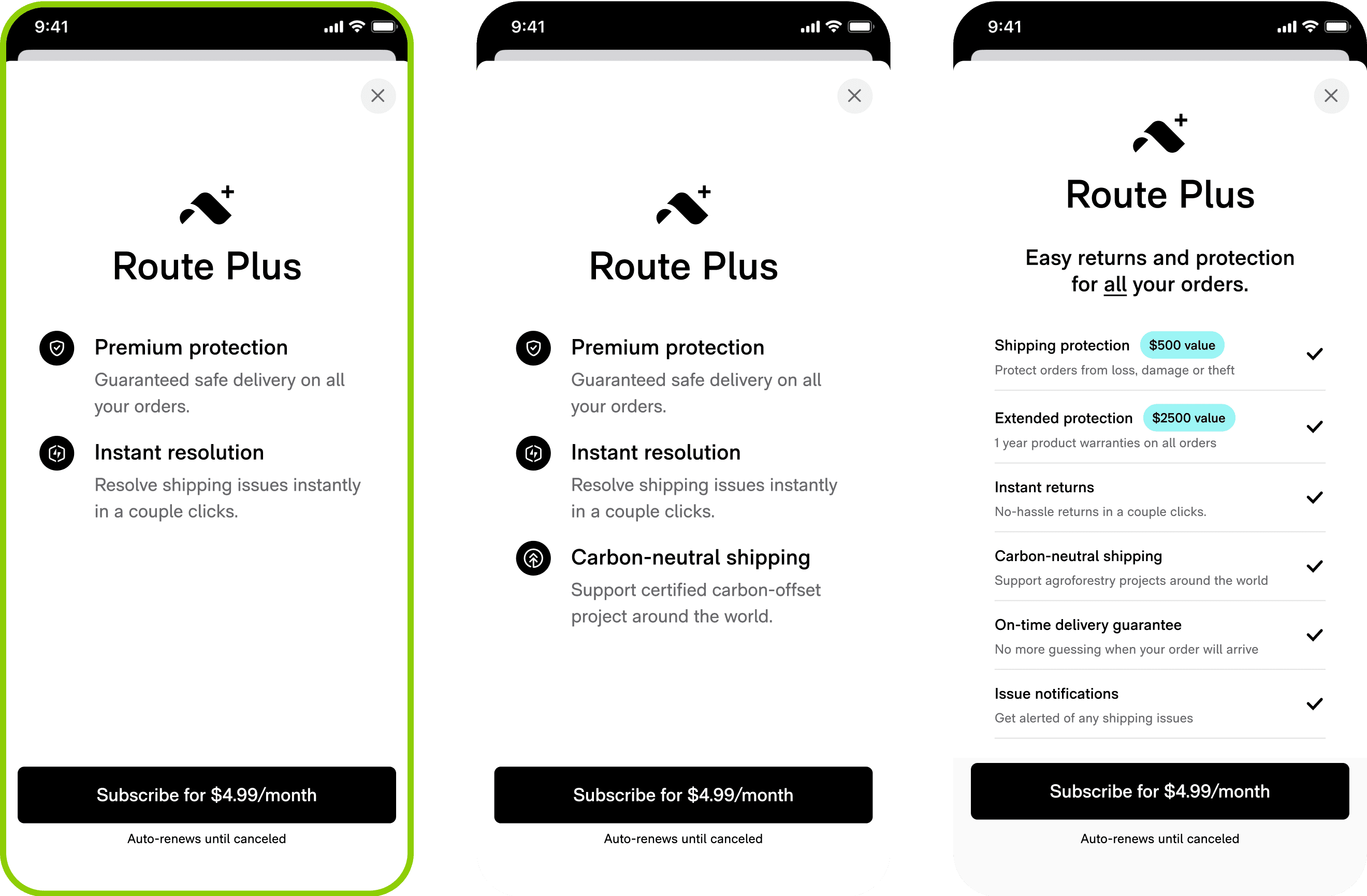
Protection only
Protection + Carbon
Big Bundle
1.8% CVR
2% CVR
2.05% CVR
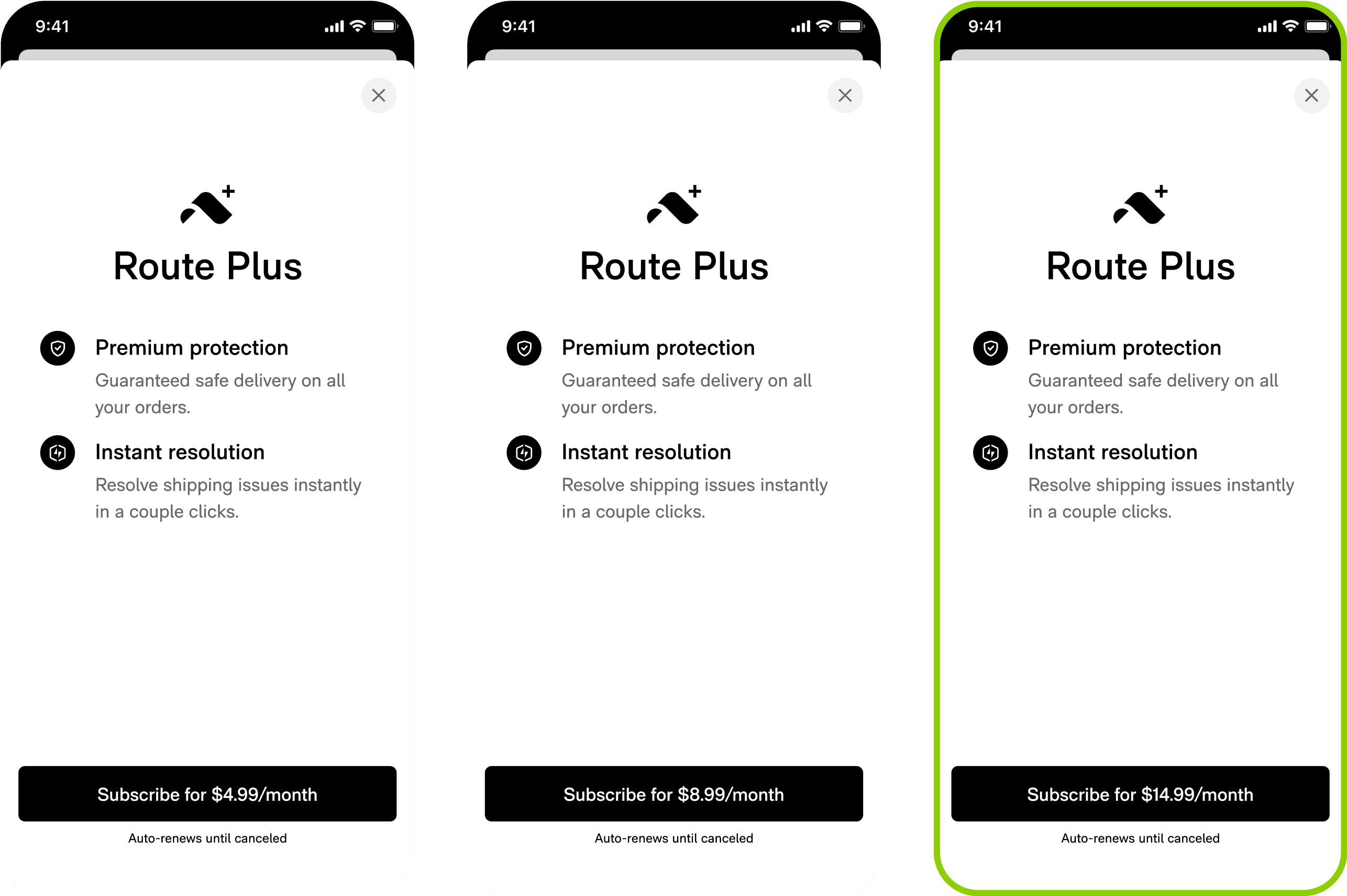
1.8% CVR
1.4% CVR
1.2% CVR
$3.2M ARR
$4.5M ARR
$6.5M ARR
SUBSCRIPTION MVP
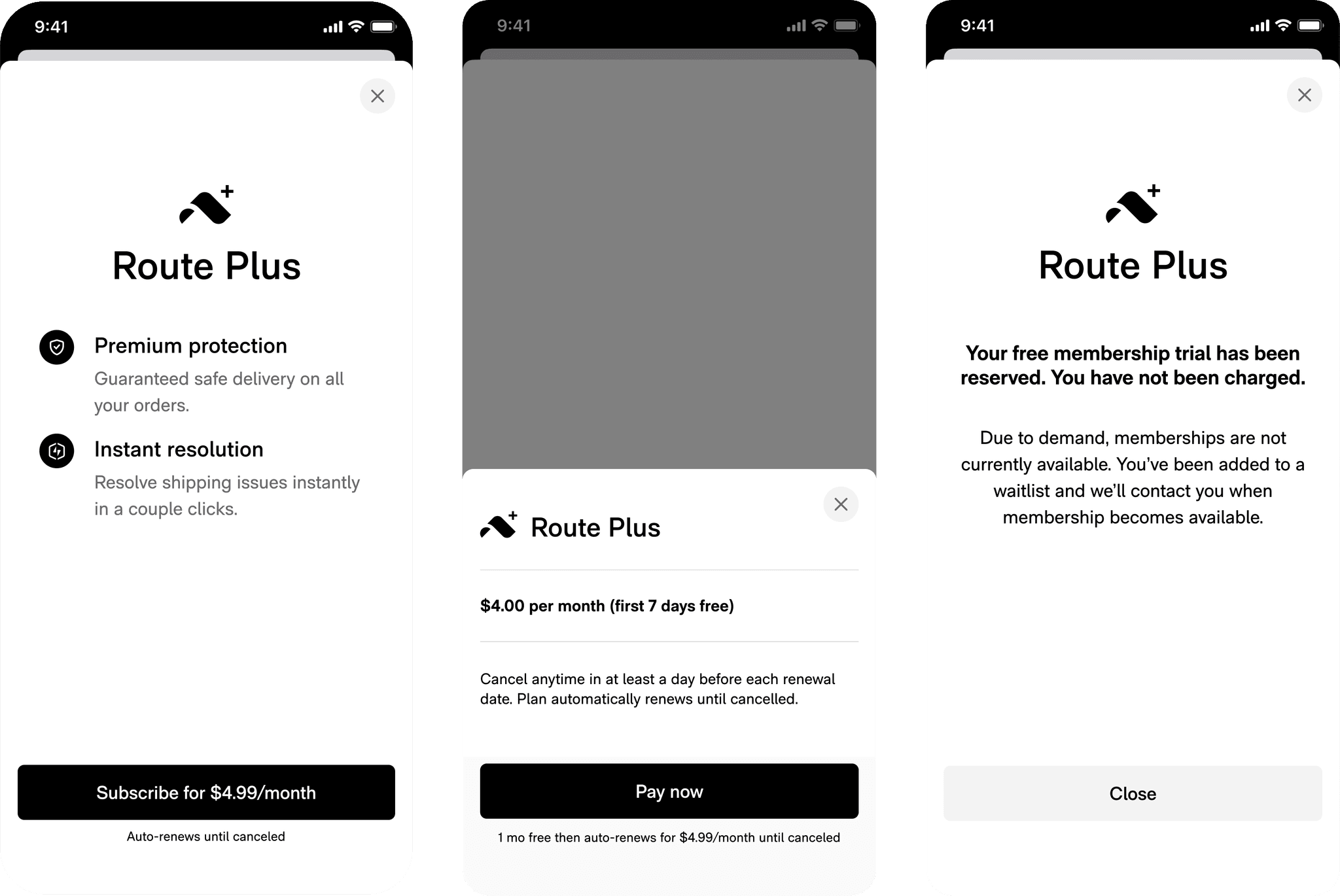
A no-frills membership that protects everything you buy.
A user discovers Route+ as a free trial upsell offered as more economical and convenient alternative to buying a la carte proteciton.
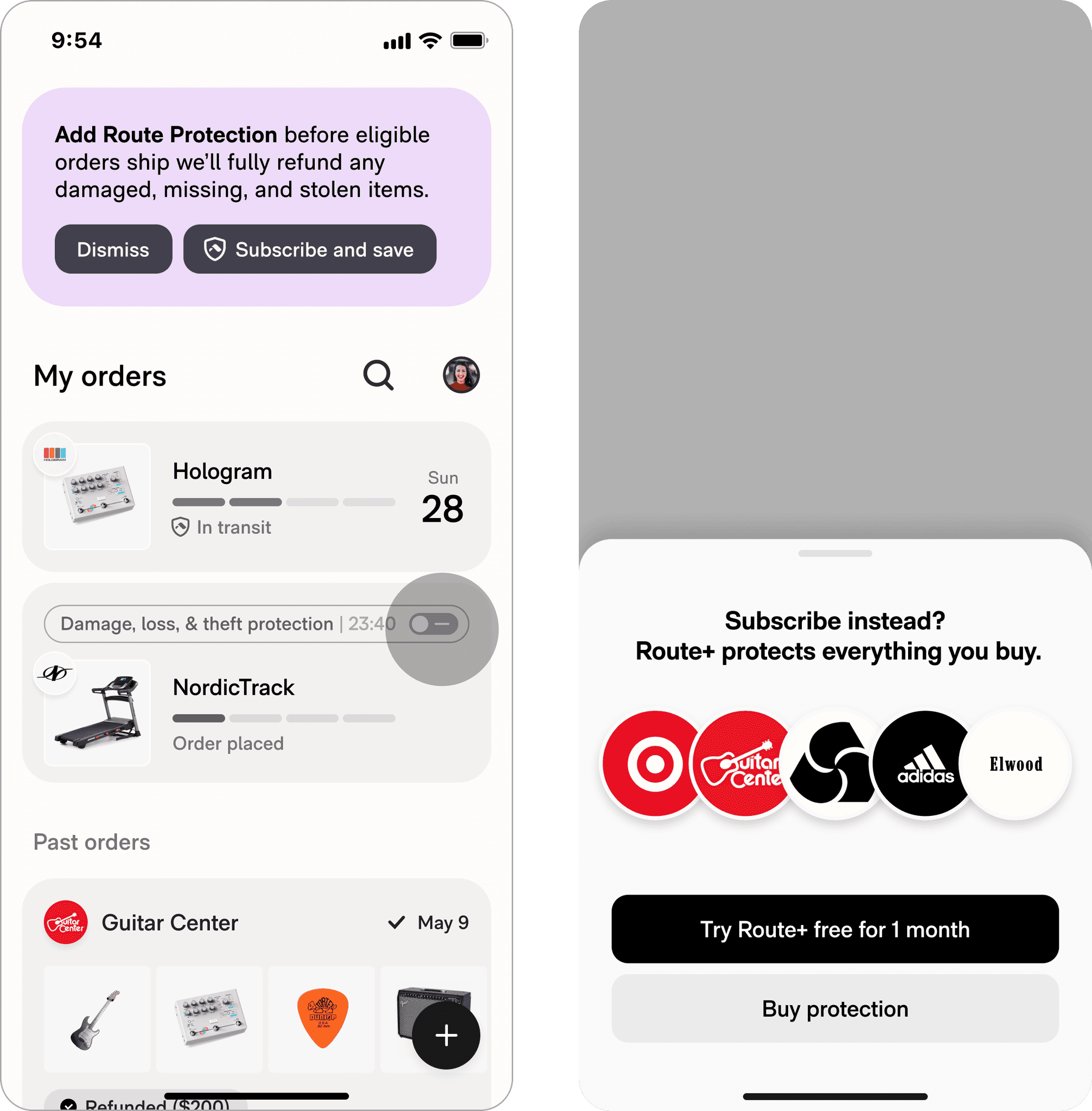
Users get $500 of coverage each 30 day period. Users file a claim if orders are lost or damaged, uploading evidence and proof of purchase, deferring months of backend work automating it.
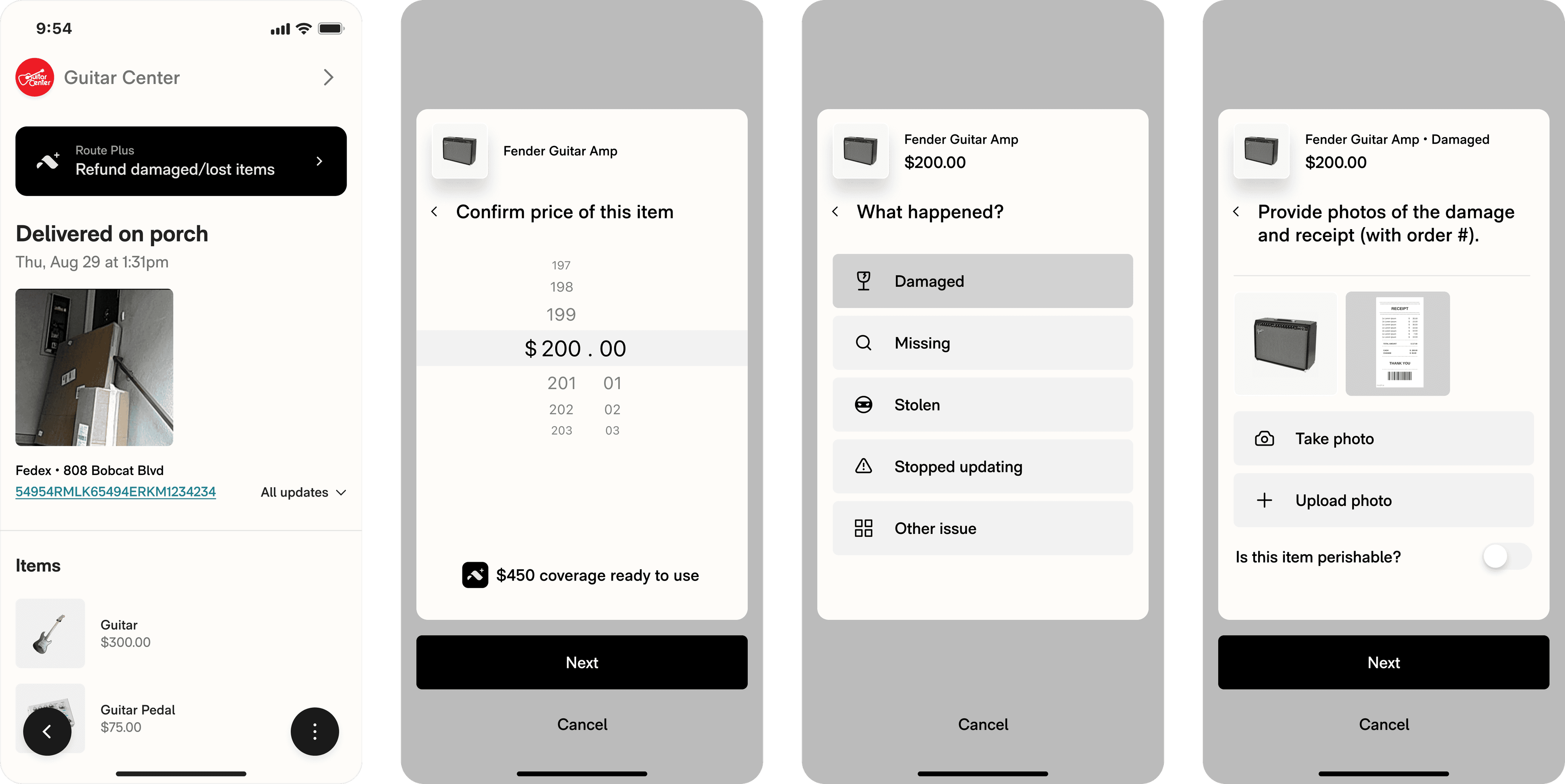
Refund progress and coverage limits are communicated on a user's tracking list, deferring the need to build a Route+ dashboard.
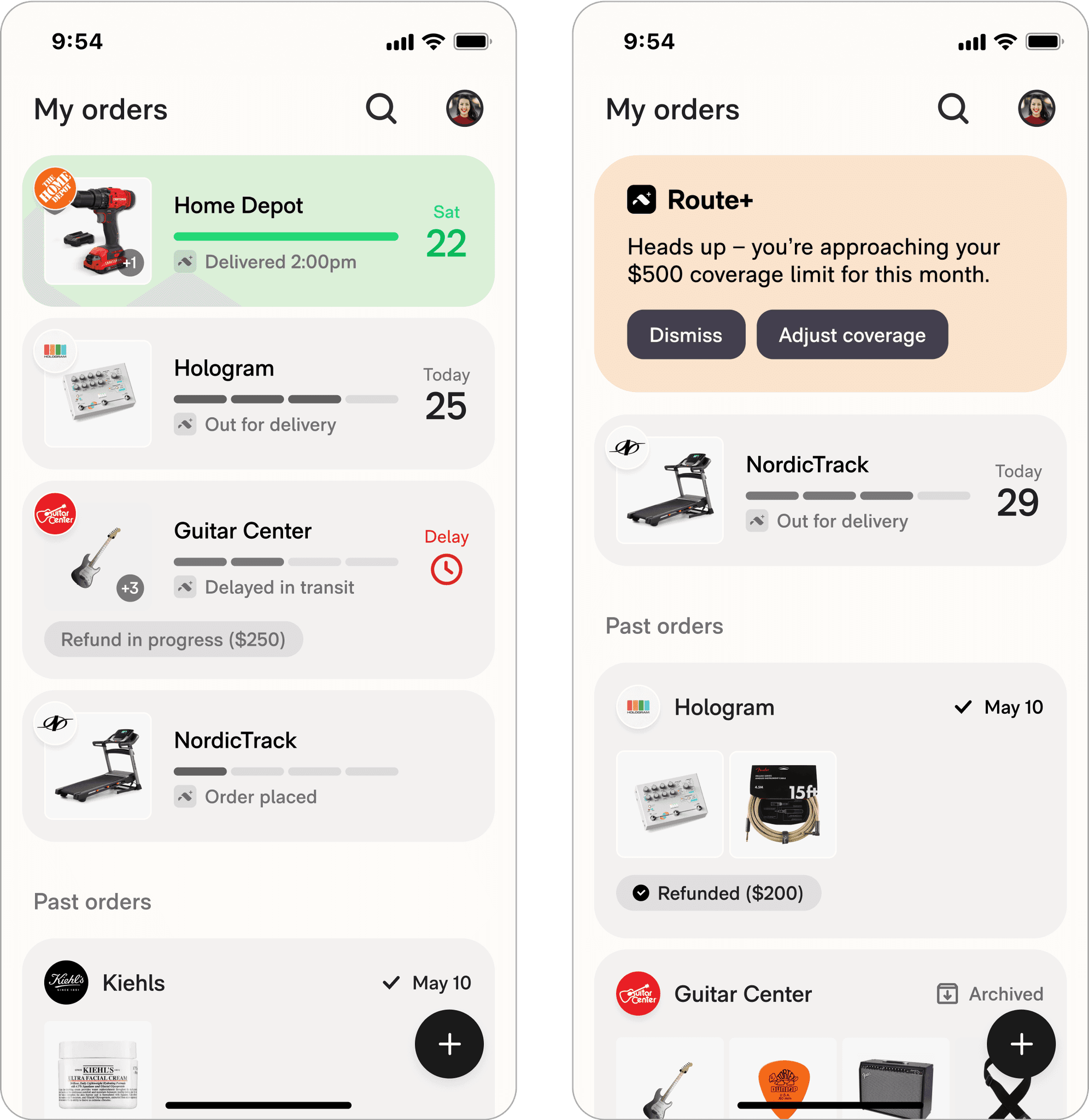
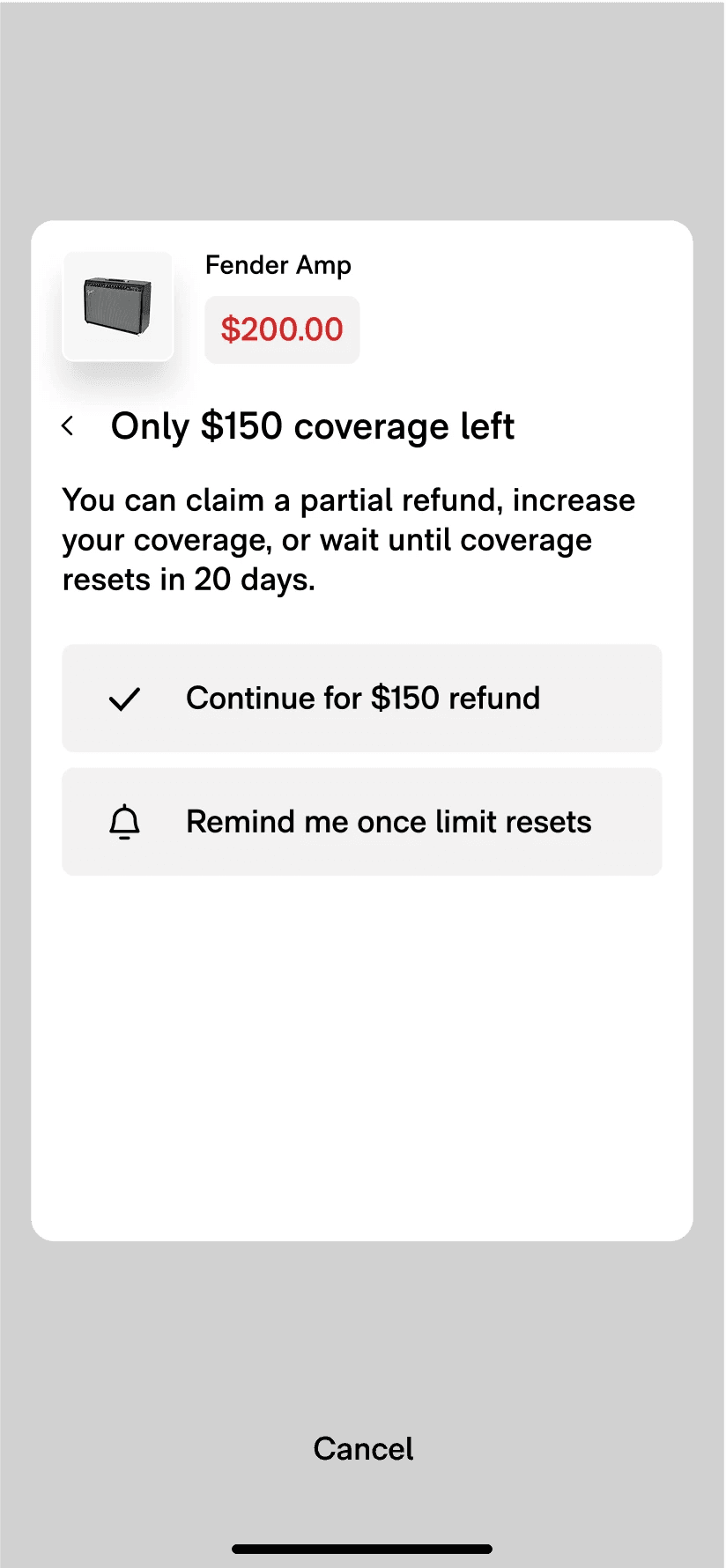
When a user hits their coverage limit, we give users a choice between partial refund or setting a reminder for when coverage resets.
Early data suggested strong recurring revenue and stickiness, before layoffs hit.
Route+
$10.2M/yr
Margin
unknown
Conversion
2.2%
App retention
+8%
Iterate
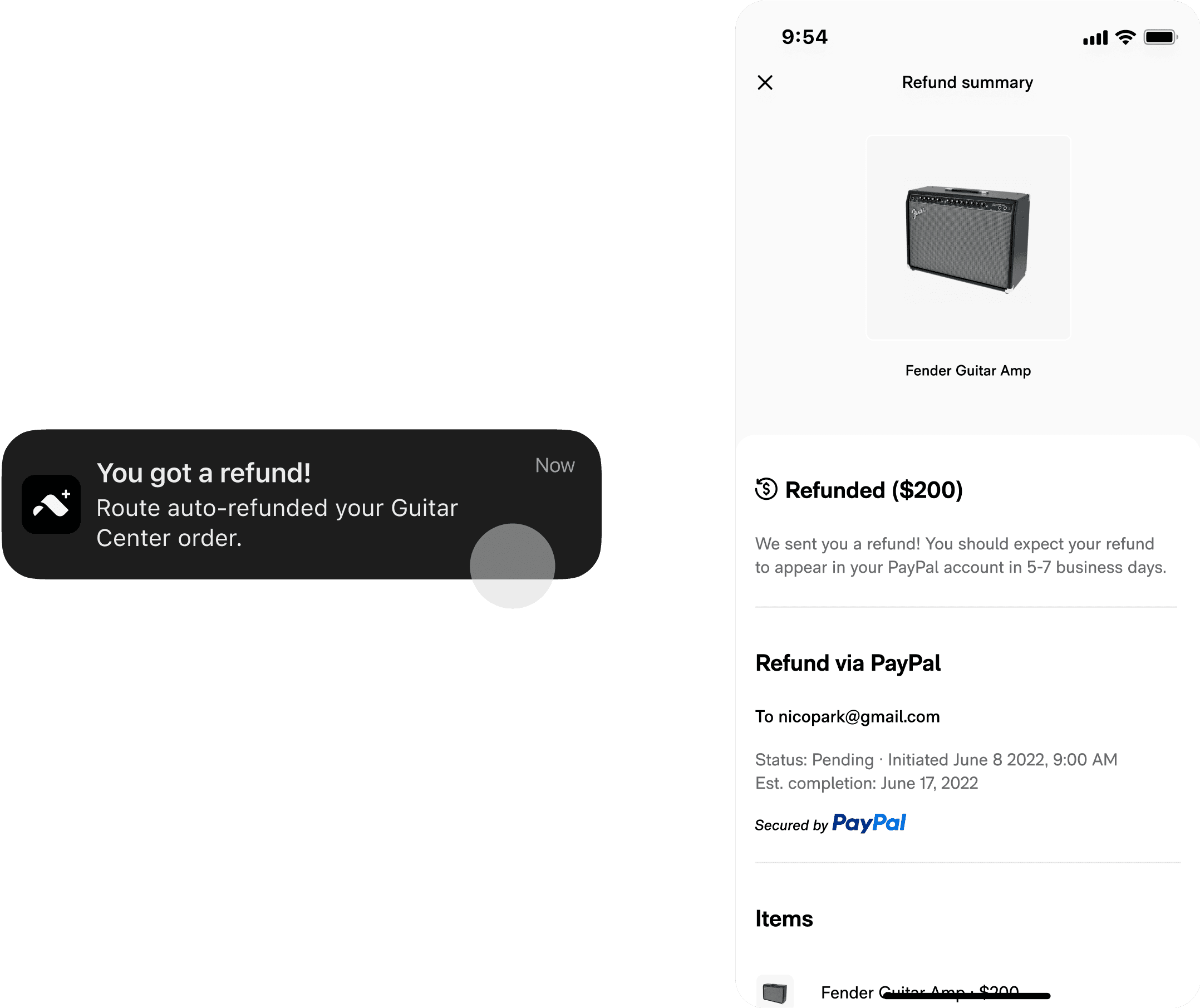
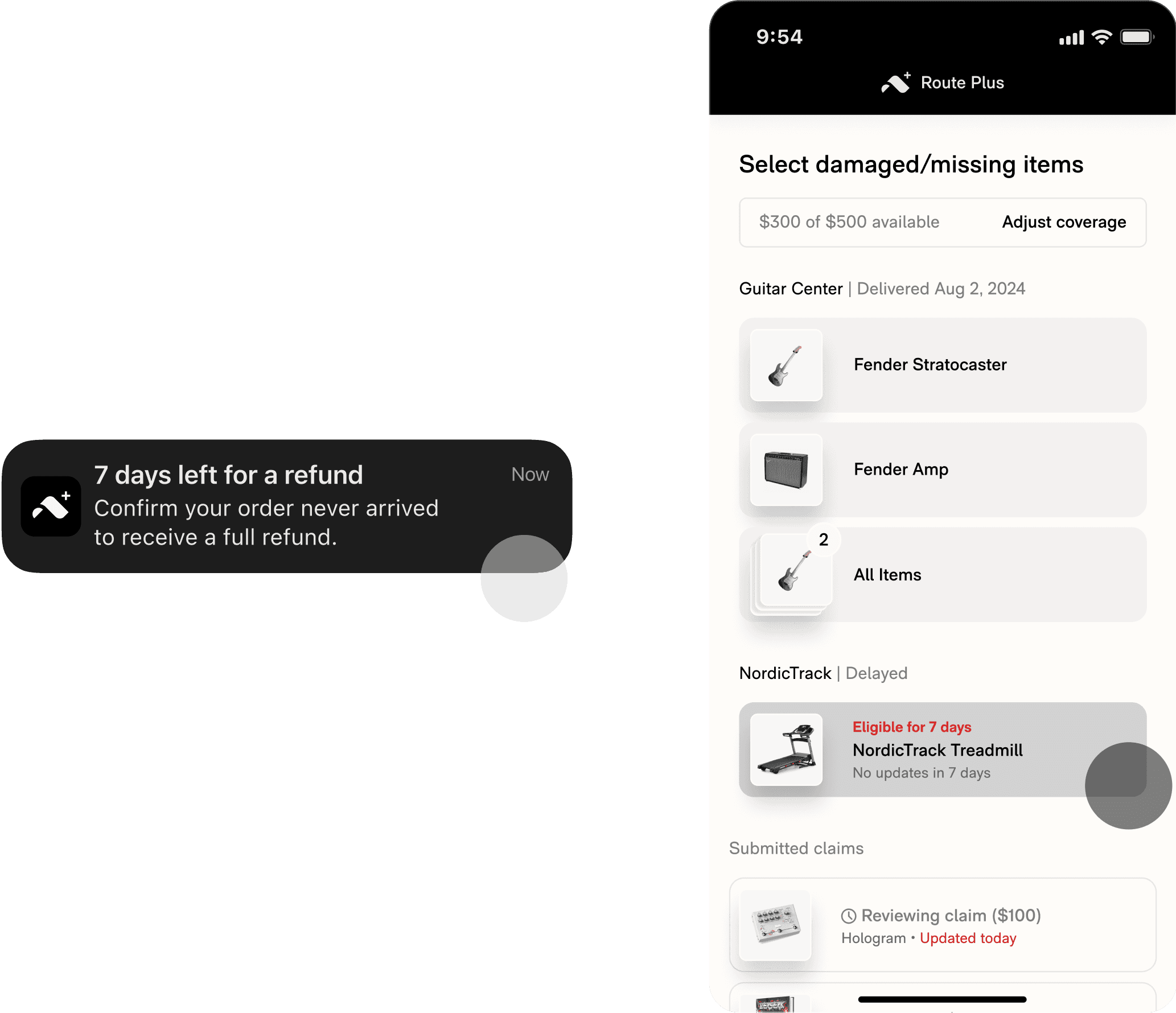
1. Automatic refunds
I anticipated users complaining that the subscription felt like a burden because it required frequent use to track and claim refunds.
To deliver $15/month value, Route+ should be a set-it-and-forget it subscription that requires no user input to detect and auto-verify lost orders. While our claims rate would increase, I predict that the improvement would improve LTV overall.
2. Proactive support
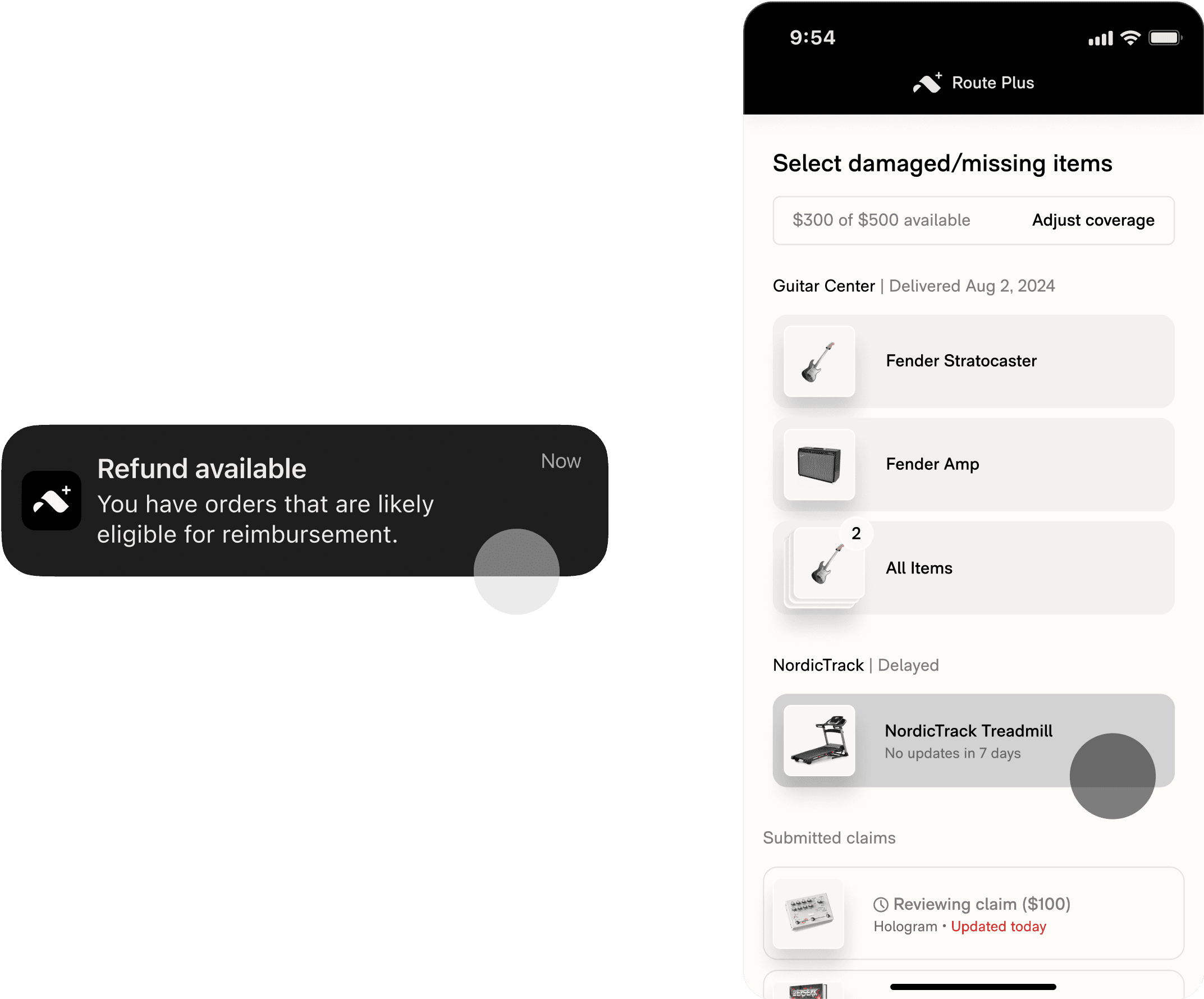
Another fast follow to improve ease of user would be proactively alerting users to refund eligibility and creating a dashboard dedicated to showing eligibility and coverage.
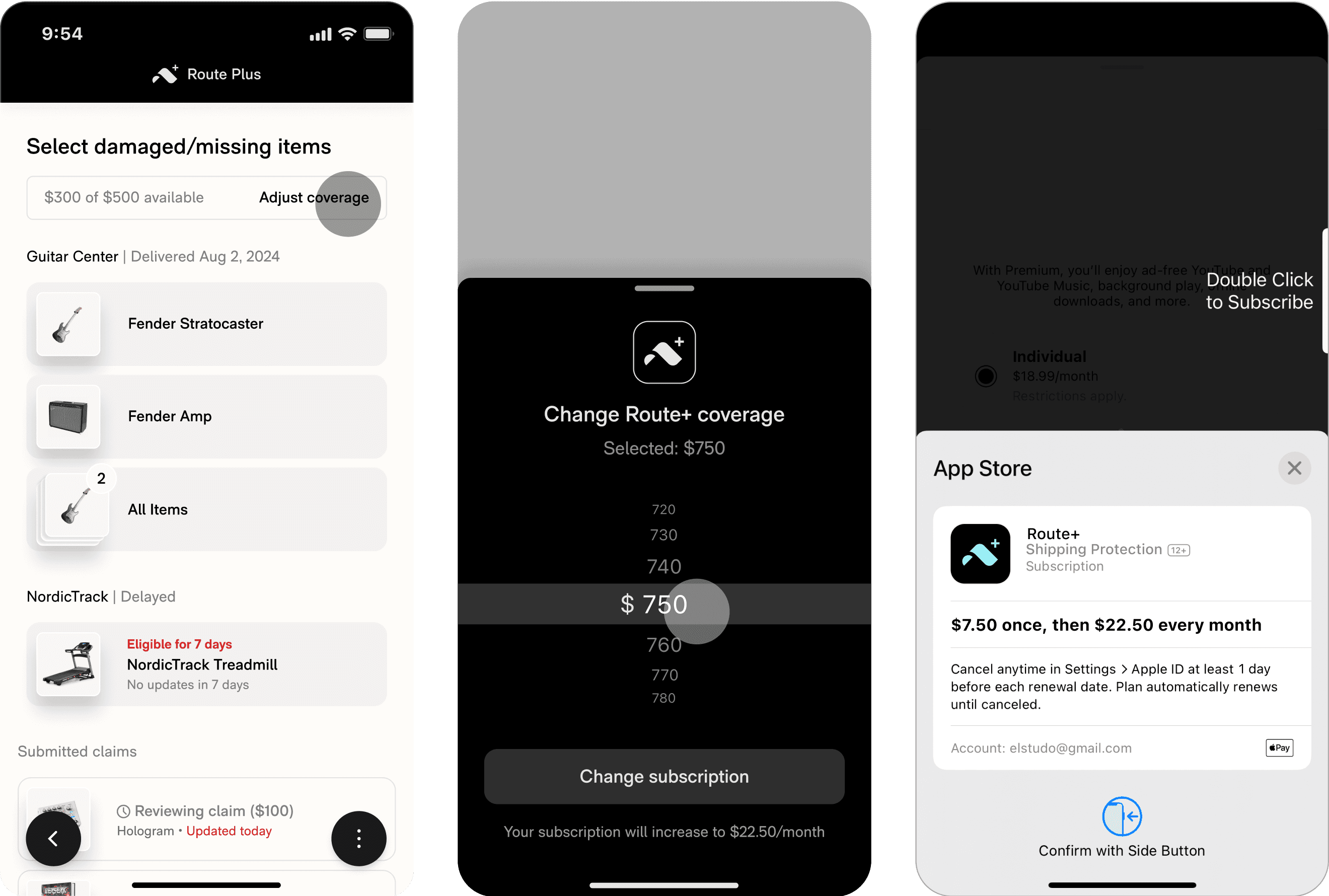
3. Coverage adjustments
Research and data pointed to high variability in monthly volue and AOV, which would create churn during low-volume months.
To prevent churn, we'd likely need to give users the ability to increase, decrease, and pause coverage.
Reflecting on Route+
A subscription must create concrete, obvious value.
Conversion depends on a user feeling like they're getting more value than they're paying for. Users who don't need to file reimbursements will become churn risks without tangible value.
We attempted to address this by branding Route+ as a Prime-like membership with soft value. In order to deliver on that promise, we would have to commit resources to building something truly hands-off and luxurious.
Great experimentation should challenge design assumptions.
One weakness of our strategy is that we relied on experimentation to guide assumptions about subscriptions rather than run experimentation that challenged our paradigms with alternative value props and models.
For a more effective approach to this project, I would have begun with outlining the full spectrum of concepts and quickly tested each, rather than moving too fast into defining and optimizing one concept.